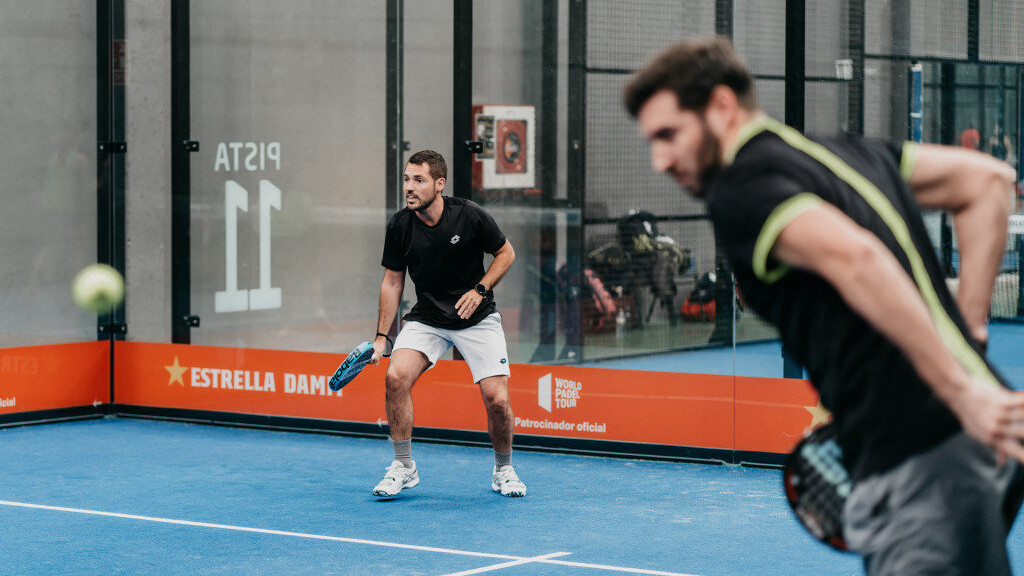
Where the lob buys you time and the passing drive tries to blast through the net players, the chiquita does something sneakier: it changes the pace and height of the rally at the exact moment the opponents are sprinting in expecting a fast ball. Here is how to hit it, when to use it, and how to stop floating it into the perfect volley.
What the Chiquita Actually Is
The chiquita is a soft, low, slow shot, usually played from the back of the court, aimed at the feet of incoming net players. It is not a lob (it stays low) and it is not a drive (it takes pace off, with at most a light slice). Its low flight and precise placement force the volleyer to contact below net height and hit up.
Think of it as padel’s answer to the drop shot’s cousin: where the drop shot dies near the net, the chiquita is played with a bit more carry so it lands short in the service box and stays ankle-high.
Why the Chiquita Wins Rallies
Most club players lose points at the net because they try to hit through the opponents. The problem: net players with time to set their feet will block or smash almost anything. The chiquita works because it attacks the one thing net players hate: a slow, low ball arriving while they are still moving.
Three reasons it is so effective:
- It forces the volley up. A ball at your shoelaces cannot be attacked. The opponents must lift it, giving you and your partner a comfortable ball to attack or reset the point.
- It punishes the net rush. Players who sprint to the net love pace. Take the pace away and their footwork gets exposed: they arrive early, plant, and then have to dig a ball out of their ankles.
- It buys control without risk. Unlike a lob, which can be smashed if it is short, a well-hit chiquita stays below the net cord. The worst realistic outcome is a neutral volley.
When to Hit the Chiquita
The chiquita is a situational weapon, not an every-ball shot. Hit it when:
- The opponents are charging the net after a transition. This is the classic moment. You see them running in, you take pace off and go at their feet.
- You receive a medium-pace ball at the back with no pressure. You have time to shape the shot and pick your target.
- Your lob is not working. On fast courts or against strong overheads, a lob is just an invitation to smash. The chiquita keeps the ball low and takes the smash away.
- You want to change the rally rhythm. After three hard drives, a soft chiquita breaks the opponents’ timing completely.
Avoid it when you are stretched wide or off balance: a rushed chiquita floats, and a floating chiquita is a sitting volley.
Chiquita Technique: Step by Step
Grip. Use your normal continental grip. Do not change grips mid-rally; the chiquita is a touch shot, not a power shot, and continental gives you the racket-face control you need.
Preparation. Short backswing, much shorter than a groundstroke. Turn your shoulders slightly and get the racket head below the incoming ball early. Long backswings are the number one cause of mistimed chiquitas.
Contact point. Meet the ball out in front of your body, around knee to mid-thigh level, and keep your hands soft. The racket face should be slightly open so you can guide the ball forward and keep its flight below net height.
The motion. Use a compact forward push, not a full groundstroke swing. A touch of slice is fine, but the shot does not need heavy spin; its effectiveness comes from slow pace, low flight, and placement. Topspin works against that purpose, while a fully flat hit is difficult to control this low.
Target. Aim for the feet or ankles of the incoming net player, landing the ball short in the service box on their side. If both opponents are rushing, pick the one who is further from the ball or weaker on low volleys. A chiquita to the middle, between the two players, also works beautifully: it creates hesitation about whose ball it is.
Follow-through. Short and controlled, finishing around waist height with the racket face still slightly open. If your follow-through is finishing over your shoulder, you hit it too hard.
Forehand vs. Backhand Chiquita
The chiquita often feels more natural from the backhand side because it is easier to add a light slice there without forcing the motion. The forehand version is just as valuable, but it may take more practice to keep the hands soft and the ball low without turning it into a drive.
On the backhand side, keep your non-dominant hand on the throat of the racket a fraction longer for stability, then use the same short forward push. Many advanced players prefer the backhand chiquita because they can produce that low, soft flight with less effort.
Practice both sides equally. Opponents will quickly notice if you can only chiquita on one wing, and they will rush the net on your weak side every time.
5 Common Chiquita Mistakes
- Floating it too high. The most common error. If the ball crosses the net well above the tape with no pace, it is a gift. Keep the flight low and send it toward the volleyer’s feet.
- Hitting it too hard. A chiquita with drive pace bounces up into the strike zone. Take 60 percent off your normal groundstroke speed.
- Aiming at the body. The torso is a comfortable volley height. The feet are not. Always go low.
- Telegraphing it. If you slow your whole body down visibly, sharp opponents will hold their position instead of rushing. Keep your preparation looking like a normal groundstroke until the last moment.
- Using it from bad positions. Stretched wide, on the run, or jammed: that is a defensive lob or a wall play, not a chiquita. The shot needs a stable base.
Drills to Build Your Chiquita
The shoelace target. Have a partner stand at the service line while you feed yourself balls from the baseline. Place a towel or cone at their feet and score a point every time your chiquita lands within a racket length of it. Ten in a row is the goal.
Rush-and-punish. Your partner starts at the baseline, hits an approach, and sprints to the net. You must chiquita at their feet as they arrive. This trains the real timing of the shot: hitting it while someone is moving toward you.
Rhythm breaker. Rally crosscourt with a partner at moderate pace. Every fourth ball, you must hit a chiquita instead of a drive. This teaches you to disguise the shot inside a normal rally.
How to Defend Against the Chiquita
Sooner or later, opponents will chiquita you. When it happens: split-step as the ball is struck, get low with bent knees, and volley it back deep and soft. Do not try to attack a ball at your ankles. A deep, neutral volley to the middle resets the point. The worst response is a panicked half-volley flick, which usually sits up or goes into the net.
If you notice an opponent chiquita-ing every time you approach, vary your net rush: sometimes hold your position a step back and let the chiquita come to you at a comfortable height, or approach behind a deeper, heavier ball that denies them the time to shape the shot.
The Bottom Line
The chiquita will not win you highlight reels, but it will win you matches. It is the shot that turns a lost cause, two opponents bearing down on the net, into a neutral rally or better. Add it to your game, drill the soft hands and compact push until they feel automatic, and watch how uncomfortable net players get when the ball keeps arriving low at their feet.