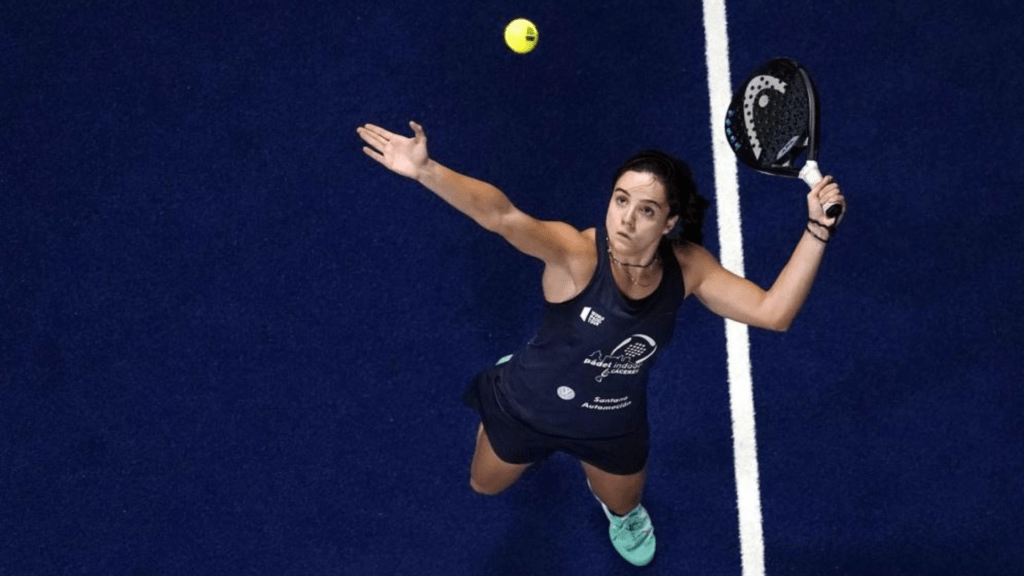
It’s the bandeja.
For players coming from tennis, this is the shot that separates padel beginners from real padel players. Here’s what it is, when to hit it, and how to make it your most reliable weapon at the net.
What Is a Bandeja in Padel?
Bandeja (pronounced ban-DAY-ha) is Spanish for “tray,” and the name is a hint at the technique: you hold the racket face flat and slightly open, like a waiter carrying a tray, and brush down through the ball with slice.
Technically, it’s an overhead shot played from around the service line or a little deeper, off a lob that isn’t short enough to smash cleanly. Instead of swinging for power, you take pace off the ball, slice it down into the back corner, and hold your position at the net. Done well, the ball dies low in the corner and your opponents are stuck digging it out from the back.
The goal of a bandeja is not to win the point outright. The goal is to stay at the net. In padel, the pair that controls the net wins most rallies, and the bandeja is the tool that lets you keep that position when a decent lob pushes you back.
Bandeja vs Smash vs Vibora: Which Overhead Do You Hit?
This is the decision that defines net play in padel. Here’s the simple version:
Smash when the lob is short. If the ball drops in front of you around the service line or closer to the net and you can hit it at full stretch, attack it. That’s smash territory.
Vibora when the lob is attackable but not quite a smash. The vibora (viper) is a faster, more aggressive overhead with sidespin, driven hard into the side glass. It’s the attacking option for balls you can’t quite smash but want to put away with pace.
Bandeja when the lob is too deep or too high to attack cleanly. This is the most common situation in club padel. The lob lands around the service line or a step behind it. Smashing from there is a gamble: you’ll likely hit it into the net or give your opponents an easy ball off the back glass. The bandeja is the high-percentage play. Recover the net, live to fight the next ball.
The rule of thumb: if you’re not sure you can smash it cleanly, bandeja it. A tentative smash loses points. A confident bandeja wins rallies.
How to Hit a Bandeja: Technique Step by Step
- Move back early. The moment you read the lob, shuffle back and turn sideways. Late footwork is the number one reason bandejas go wrong. Get behind the ball so you can contact it slightly in front of your body.
- Keep the preparation short. Unlike a smash, there’s no big wind-up. Racket goes up and back with a continental grip, elbow roughly at shoulder height, non-hitting arm pointing toward the ball for balance.
- Brush down through the ball. This is the heart of the shot. Instead of hitting through the ball flat, cut down and across it, high to low, with a slightly open racket face. The slice creates backspin that brings the ball down and keeps it low after the bounce.
- Contact in front, finish low. Meet the ball slightly in front of your body, never behind your head. The follow-through finishes down across your body, not up and out like a smash.
- Get back to the net. The shot is only half the job. The moment you hit it, move forward and recover your net position. The whole point of the bandeja is that you get to stay on offense.
Where to Aim Your Bandeja
Placement beats power on this shot. Two targets cover almost every situation:
Into the back corner. Hitting deep to the corner, letting the ball take one bounce and die near the side and back glass, is the classic bandeja. The glass slows the ball and your opponents have to dig it out from the worst spot on the court. This also buys you the most time to recover the net.
Down the middle. Aim between the two opponents so the second bounce lands near the back glass. This creates confusion about who takes it and drags both players toward the center, opening the court for your next shot.
Avoid going for sharp angles or winners. A bandeja hit with 70 percent effort to the right spot beats a bandeja smashed at full power nine times out of ten.
3 Common Bandeja Mistakes (and Fixes)
Hitting it flat like a smash. If you swing flat with no slice, the ball has no backspin to bring it down. It either clips the net or sits up begging to be counterattacked. Fix: exaggerate the high-to-low brushing motion in practice until the slice feels natural.
Trying to hit a winner every time. Overhitting defeats the entire purpose of the shot. The bandeja is a control shot. If you’re going for winners off bandejas, you’re playing the wrong shot. Fix: aim for depth and low bounce, not pace.
Moving back too late. If you drift back slowly and contact the ball behind your body, you’ll dump it in the net or pop it up. Fix: the instant you see the lob, turn sideways and shuffle back. Early feet make everything else easy.
Drills to Practice the Bandeja
You don’t need a coach to build a decent bandeja. Two simple drills:
Feed and recover. Have a partner feed lobs from the baseline while you start at the net. Hit a bandeja, then immediately recover to the net before the next feed. Ten reps, then switch. This trains the footwork pattern that matters most.
Corner targets. Place a target (a towel works) in the back corner. Rally bandejas with a partner and score yourself on how many die low in the corner. It builds the placement habit that makes the shot effective in matches.
The Bottom Line
The bandeja isn’t the flashiest shot in padel, but it’s the one that keeps you in control of the point. Learn to read the lob, take the safe overhead instead of the hero smash, and you’ll hold the net more often, and win more rallies because of it.
Next time a decent lob pushes you off the net, don’t panic and don’t swing big. Tray up, brush down, and take the net back.